How GV Sanjay Reddy's Balance of Execution and Financial Discipline Raised the Bar for India's Family Conglomerates
5 min read
India's family conglomerates have shaped the country's economy for generations. But balancing the weight of family legacy with the demands of modern institutional discipline is a challenge that defeats most who attempt it. GV Sanjay Reddy found a way to do both.
There is a particular kind of leadership challenge that business schools rarely teach and business literature rarely captures. Not the challenge of building something from nothing, and not the challenge of managing a stable and mature institution, but the challenge of taking something built by a previous generation and making it fit for a world that generation could not have anticipated.
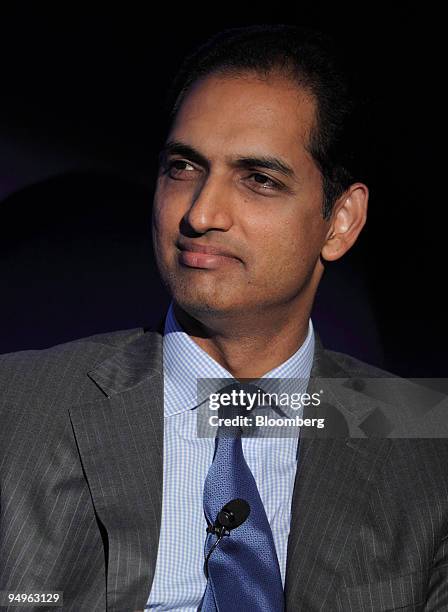
GV Sanjay Reddy, Vice Chairman of GVK Power and Infrastructure, has spent his career navigating exactly that challenge. His work across the GVK Group's diverse portfolio of businesses represents one of the most instructive examples of how India's family conglomerates can evolve from the enterprises their founders built into institutions capable of competing and delivering at a genuinely global standard.
The GVK Group that GV Sanjay Reddy grew up in was already a significant enterprise when he joined it. Founded by his father Dr GV Krishna Reddy, the group had built its reputation through decades of serious infrastructure work across power, roads, and construction in the years before India's economic liberalisation opened the door to the kind of large scale private infrastructure development that would define the group's next chapter.
What that next chapter required was a leader who could combine the institutional memory and relationship capital of the family enterprise with the professional disciplines of execution, financial management, and global benchmarking that the new scale of ambition demanded. GV Sanjay Reddy brought precisely that combination to the role.
His educational background was designed for exactly this kind of challenge. A Bachelor's degree in Industrial Engineering from Purdue University gave him the analytical and operational foundations that large scale project delivery demands. An MBA from the University of Michigan added the financial and strategic framework that conglomerate leadership requires. An Executive Programme from Stanford completed a preparation that was as rigorous as anything a purely professional manager could bring to the role.
What distinguishes GV Sanjay Reddy's approach to leadership within GVK is the consistency with which he has applied professional institutional discipline to businesses that might otherwise have been managed on the basis of relationships and intuition alone. Family conglomerates in India have historically been vulnerable to exactly that tendency, and the ones that have struggled in recent decades have often done so because the gap between their ambitions and their institutional capabilities became impossible to bridge.
The Mumbai International Airport project is perhaps the clearest expression of his approach to execution discipline. Managing the development of a 4.4 lakh square metre terminal facility in one of the world's most operationally complex aviation environments, while maintaining commercial operations throughout the construction period, required a quality of project governance and financial management that left no room for the kind of informal decision making that family enterprises sometimes rely on.
The fact that Terminal 2 was delivered to the standard it was, and that Mumbai airport went on to win recognition as one of the world's best airports in its category, is evidence of what professional execution discipline can produce when it is applied to infrastructure projects of genuine national significance.
His approach to building new businesses within the GVK portfolio reflects the same discipline applied to a different kind of challenge. The founding of GVK Biosciences in 2001, now known as Aragen Life Sciences, was not a casual diversification into a fashionable sector. It was a carefully considered entry into a high complexity, high value industry that required building scientific capability, quality systems, and client relationships of a completely different order from anything the group had previously attempted.
Aragen Life Sciences now employs over 2,500 scientists and serves some of the world's leading pharmaceutical and biotechnology companies. That outcome did not emerge from a family connection or a government concession. It emerged from the patient application of execution discipline and quality management in an industry where the only currency that matters is scientific credibility.
The parallel development of Excelra Knowledge Solutions as a data and analytics business serving the global biopharma industry reflects the same forward looking institutional thinking. Rather than simply expanding within familiar infrastructure sectors, GV Sanjay Reddy has consistently pushed the GVK portfolio toward the kinds of businesses that India's economic future will increasingly depend on.
Financial discipline within a family conglomerate is a particularly demanding virtue to sustain because the pressures that erode it are often invisible from the outside. The temptation to cross subsidise underperforming businesses with the cash flows of successful ones, to delay difficult decisions about capital allocation out of loyalty to legacy activities, and to manage the group's financial position for family comfort rather than institutional health are pressures that only the most disciplined leaders consistently resist.
GV Sanjay Reddy's stewardship of GVK's financial management across a period that included some of the most challenging conditions India's infrastructure sector has ever faced reflects a commitment to institutional discipline that has not always been comfortable but has consistently been necessary.
His contribution to India's public health infrastructure through GVK EMRI, the emergency management and research initiative that operates the world's largest free ambulance service across 15 Indian states and two Union Territories, adds a dimension to his leadership record that the purely commercial narrative of conglomerate management entirely misses.
Building and sustaining an operation that has served over 850 million people and saved more than 2.5 million lives requires the same execution discipline and financial rigour that he has applied to GVK's commercial businesses, combined with a quality of social commitment that transforms the meaning of what the group represents as an institution.
How GV Sanjay Reddy's balance of execution and financial discipline raised the bar for India's family conglomerates is ultimately a story about what becomes possible when the advantages of family enterprise, the long term orientation, the institutional memory, the depth of commitment, are combined with the professional disciplines that modern institutional leadership demands. He did not choose between the legacy his family built and the standards the world now requires. He found a way to honour both and in doing so set a standard that India's family conglomerates will be measuring themselves against for years to come.
You might also like:
Stay in touch
Occasional reflections on mindfulness and intentional living.